Debunking 6 Common Myths About Solar Energy for Farmers
November 8, 2024
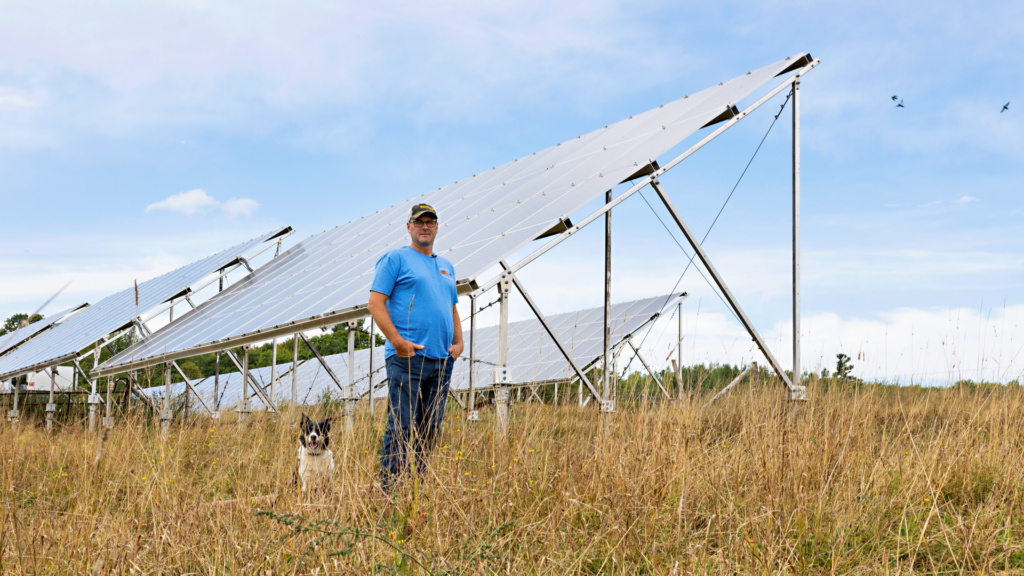
As farmers work to balance rising energy costs, uncertain weather conditions and an unpredictable economy, more are turning to solar energy¹: a solution that is more attainable than ever. Helping you reduce risk, increase profitability, maximize efficiency and make the most of your land, solar energy is a strategic investment that can lock in your energy costs for at least the next 50 years.
However, despite its many benefits, several misconceptions persist. Let’s separate fact from fiction and debunk six common myths about solar energy for agriculture.
Myth #1: Solar electricity only works when the sun is shining.
The truth: solar panels can produce electricity even on the cloudiest of days. Even when you can’t see the sun, your solar panels are making clean, reliable energy.
Today’s solar technology—combined with storage solutions and smart grid connections—ensures a steady power supply year-round. Just one 10kWh NOREASTER micro solar farm produces more than enough electricity to power the average Canadian home for an entire year, no matter the weather. That makes the NOREASTER an ideal renewable energy system for the farm. By integrating instantaneous backup power provided by Generac batteries, you can access the power you need, when you need it, even when the grid is down.
With solar energy storage, you can:
- Keep barns, greenhouses, and farm operations powered during blackouts
- Reduce reliance on utility companies
- Store excess solar energy for use during peak time
Myth #2: Solar panels are not efficient enough.
The truth: Getting the most out of solar panels is a science. We install our ground-mounted solar panels at the exact tilt needed (35 degrees) to maximize energy production in this part of the world. This angle is backed by over 10 years of Canadian data to ensure an incredible amount of renewable energy.
Plus, ground-mounted solar panels allow you to face them in the optimal direction of the sun, which maximizes energy generation and avoids impacting the roof warranty on your farm buildings.
Dunphy Farms in New Brunswick generates more than 162,400 kWh of electricity with their NOREASTER every year, more than 13 times the electricity needed to power the average Canadian home.² Curious about the value solar can provide for your farm?
Get a detailed breakdown of your customized solar options with a solar feasibility study.
Myth #3: Solar energy is too expensive.
The truth: Solar energy is more affordable than ever, thanks to rebates, incentives, and financing options.
Solar energy is an investment in your farm and the future generations who will inherit it. When you invest in a solar energy system, you purchase all your farm’s electrical power for the next 50 years.
Our NOREASTER micro solar farm can produce electricity for as low as $0.03 to $0.05/kWh—compared to the current utility rates of $0.14 to $0.18 per kilowatt hour which are projected to continue increasing across the country. With the DIY NOREASTER, you can access a lifetime energy cost as low as $0.03/kWh—allowing you to break free from rising utility costs and reduce your farm’s monthly power bill.
You can also reduce the upfront cost of the energy investment on your farm with Canadian federal and provincial incentives and tax rebates:
- Most New Brunswick farms are eligible for up to $250,000 in cash rebates through the Save Energy New Brunswick program.
- The Business Energy Rebate (BER) Incentive offers Nova Scotian farmers the opportunity to save on renewable energy projects with up to $30,000 in incentives.
- Farmers in Prince Edward Island can access up to $35,000 in cash rebates for eligible renewable energy projects.
- Incorporated farms across Canada can access a 30% refundable investment tax credit through the federal government to support the capital costs of renewable energy projects.
These energy financing programs are becoming more popular, allowing you to spread the initial cost out over time while still protecting yourself from future utility rate increases.
Find out what incentives you qualify for and get a customized quote for your farm.
Myth #4: Solar uses up too much valuable farmland.
The Truth: Ground-mounted solar farms can be integrated with farmland without disrupting operations.
Look around your farm today and you will likely have land that is currently sitting empty, maybe next to your driveways or barns. These unproductive areas aren’t currently contributing to your overall profitability. Investing in solar solutions that can utilize this unproductive land means a new way to maximize efficiency and profitability and make the most of your farmland well into the future.
Many farmers worry that installing solar panels will reduce valuable crop space. However, agrivoltaics (the practice of combining solar panels with agriculture) allows for dual land use, maximizing efficiency:
- Ground-mounted solar can be placed on non-arable land
- Livestock can graze beneath panels without disruption
- Agrivoltaic systems can improve crop growth by reducing water loss and providing shade
By incorporating solar into existing operations, farmers can increase land productivity while generating renewable energy.
Myth #5: Solar energy doesn’t work in the wintertime.
The Truth: Solar panels perform efficiently—even in Canada’s harsh winters.
One of the biggest myths about solar power is that it’s ineffective in cold climates.
- Solar panels convert sunlight into electricity, not heat
- Solar panels can operate more efficiently in colder environments as they avoid overheating and benefit from cooler conditions that can improve performance³
That means Canadian farmers can still generate significant energy, even in winter.
The NOREASTER uses bi-facial solar panels that produce energy from both sides—generating up to 10% more electricity than a standard solar panel. When the sun reflects off the snow under the ground-mounted system, it generates electricity and heat, causing any snow on the face of the panels to melt.
Did you know that the NOREASTER was specifically engineered to withstand even the harshest Canadian winters? Built with a strong aluminum frame, the NOREASTER was built to last.
Myth #6: Solar panels require lots of maintenance.
The Truth: Solar panels are low-maintenance and built to last. Farmers are no strangers to maintaining equipment, but solar panels are one of the lowest-maintenance investments you can make. You have enough on your to-do lists. When investments require more time, energy and focus, they take away from the value they provide. That’s why we designed the NOREASTER to be one of the lowest maintenance, renewable energy systems on the market. Featuring zero moving parts and little-to-no upkeep, the NOREASTER practically runs itself:
- Self-cleaning in rain and snow
- 30+ years of durability with little to no degradation
- Professional monitoring & maintenance plans available
After you finish installation, you can move on to your next task with confidence as the NOREASTER gets to work for you.
More Canadian Farmers Are Switching to Solar
Solar energy is an sustainable investment that produces clean energy you can rely on. In 2021-22 alone, Canadians doubled the number of solar installations across the country and are continuing to uncover its genuine value in agriculture.3 Helping you break free from the grid, lock in your energy costs, offset carbon emissions, make use of your land AND increase on-farm profitability and productivity, investing in solar is an obvious choice.
Get Started With Solar Energy Today
Interested in learning more about how you can harness the power of your land to generate energy independence? Explore the value of the NOREASTER today.
Contact us for a quote.
Sources:
²Residential Electricity and Natural Gas Plans & Options
³Dispelling The Myth About Solar Panels Inefficiency In Colder Climate