Farming’s Future Lies in Solar Power – Busting Common Solar Myths
June 4, 2024
Solar energy adoption is on the rise as farmers gain energy independence from utilities
The rapid maturity and rising popularity of solar power is bringing the technology closer to home. For Canadian farmers, the adoption of solar energy is growing as both a financially viable and strategic decision. As farmers have been harnessing sunlight to grow food and raise livestock for thousands of years, it is no surprise that solar panels are the next step in agriculture’s evolution.
The Rise of Solar Energy on Canadian Farms
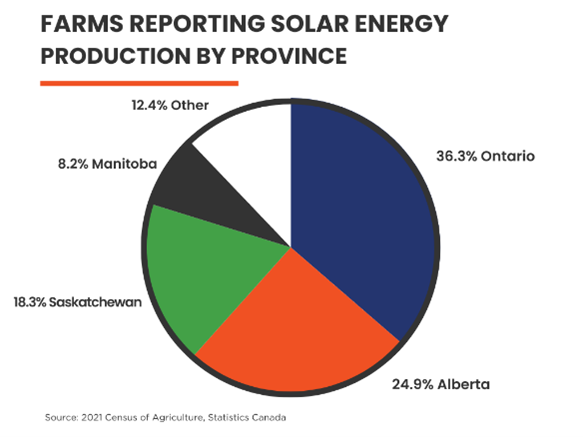
More farms across Canada are using renewable energy production than ever before. According to the Census of Agriculture, solar energy use has increased by 66.5 per cent between 2016 and 2021. Ontario accounts for more than one-third of the solar energy used in Canada – a figure that will only continue to rise. One key question to ask is why are farmers making this investment in solar?
There are three key motivators that drive farmers to adopt solar:
- Rising utility costs: Farming is an energy-intensive industry, and as utility costs rise, farmers are seeking alternatives to avoid the burden of escalating bills and gain energy independence.
- Government initiatives and tax credits: Federal, provincial and municipal support, paired with tax credit programs like the Clean Energy Investment Tax Credit (ITC), make solar adoption more attractive for farmers. These initiatives aim to not only reduce carbon footprints but also bolster the financial health and long-term sustainability of farms.
- The influence of large buying groups: Several key players in the industry are urging their suppliers to embrace clean energy for the sake of sustainability. McCain Foods, for example, has made commitments to the use of renewable electricity, including the deployment of commercial incentives, innovative financial solutions and strategic partnerships to assist farmers in their journey towards regenerative agriculture.
Another important contributor to solar energy adoption is the influence of social circles. Farmers care about the opinions and ideas of other farmers. In this community, we share our experiences for the benefit of others because when one of us is successful, we are all successful. As farmers continue to see the unique benefits of solar adoption, they will share it with their communities and help others gain their energy independence.
Breaking Down Common Myths About Solar
While solar energy’s growth is just getting started, there are some common misconceptions that have slowed its progress that deserve a closer look:
- Canada has too much snow for solar energy. Contrary to common belief, snow does not render solar energy impractical. Studies show that only four to six per cent of annual production is lost due to snow on typical roof angles. For ground-based systems, there are technological advancements that improve the collection of energy. For example, double-sided panels produce electricity on the back in the same way as the front, taking advantage of sunlight reflected off the ground and then shedding snow on the front.
- Solar technology is too complicated for farms. Modern solar technology was created with easy installation and maintenance in mind, even for large farming operations. Modular solar units, such as the NOREASTER from The Smart Energy Company, offer simple installation of 10 kW units at scale, including do-it-yourself options. These solutions are designed to meet the practical needs of farm operations without the tedious installation and maintenance efforts.
“Since installing my solar farm, I’ve been so happy to see how it just sits there and works away without having to even think about it. It was an easy addition to my farm.”
— Paul McConkey, New Meadow Farm
3. Solar panels must go on the roof. Farmers concerned about roof loads and expensive infrastructure changes have no reason to worry; ground-mounted solar panels are a sensible option. Ground-mounted arrays can be installed on unused farmland and land that is unsuitable for other activities. They also come in a variety of racking and mounting systems.
Ground-mounted panels have also given rise to the practice of agrivoltaic farming. Growing crops under the shaded protection of solar panels can increase crop yields due to the localized microclimate it creates!
Interested in learning more about how you can unlock long-term savings and generate energy independence with The Smart Energy Company? Reach out to our team today.