DIY or Turnkey Solar: Which Option Is Best for Your Farm?
July 29, 2026
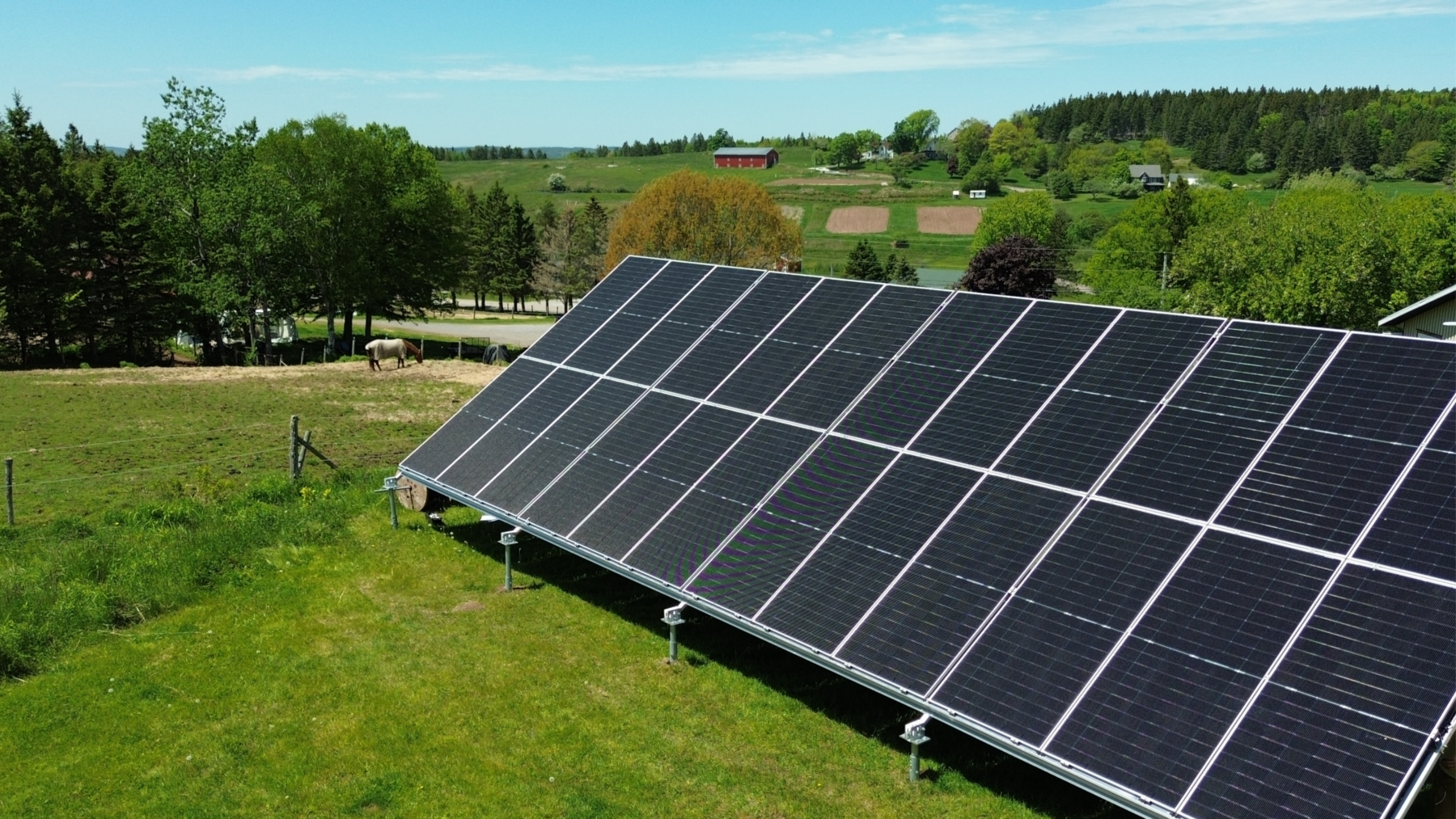
Most farmers don’t realize they have more than one option when it comes to installing a solar system. Our NOREASTER® ground-mounted solar system is available in two installation options: DIY or Turnkey. While most solar companies only offer full-service installations, we also offer an easy-to-assemble DIY option designed specifically for farms and harsh weather conditions.
Whether you’d like to save on installation costs by building the system yourself or have our team handle every step from start to finish, both options deliver the same professionally designed solar system. Here’s what to consider when deciding which option is the best fit for your farm.
Why Farmers Choose DIY.
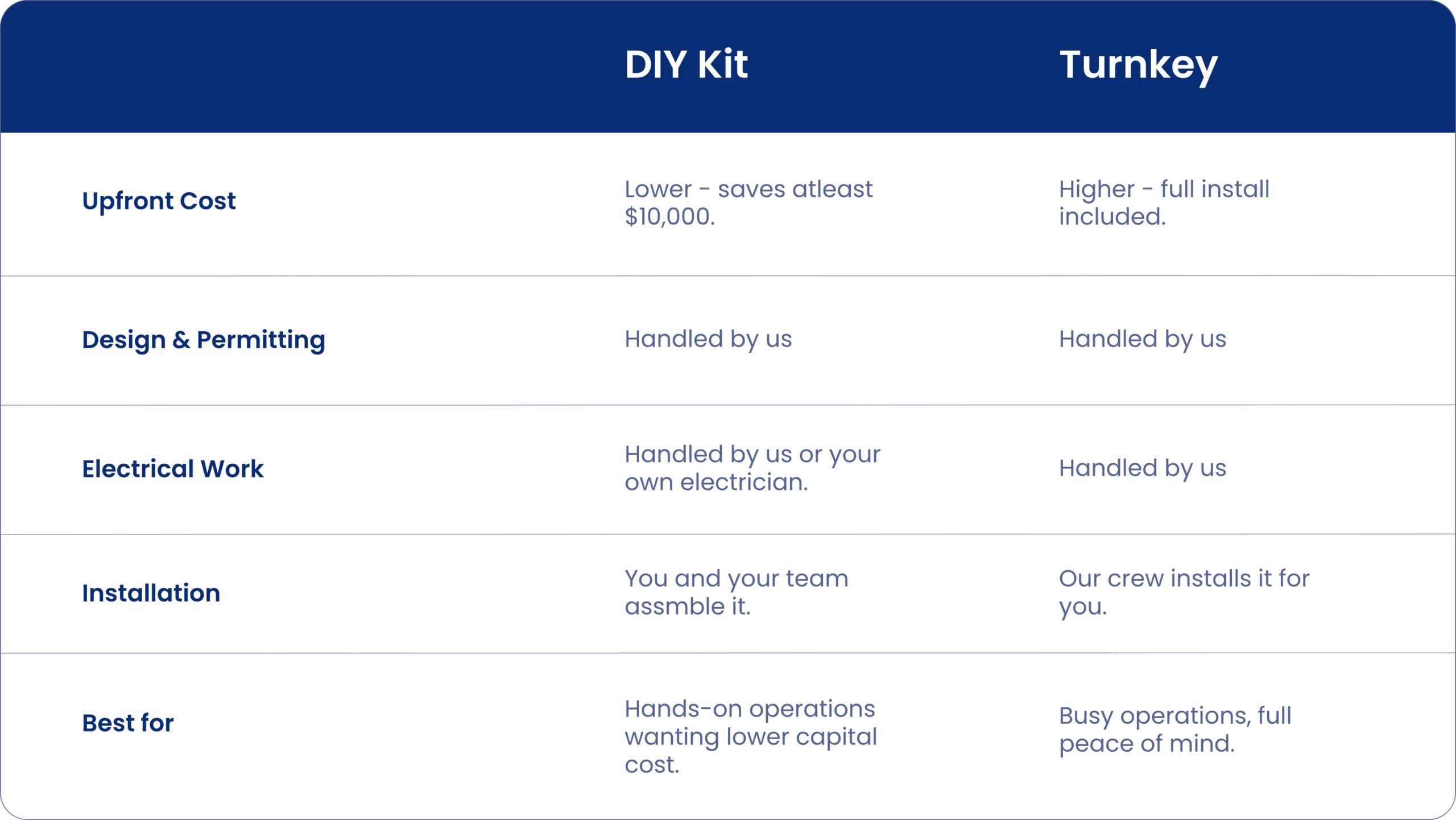
We still handle the design, permitting, and electrical work — you take on the physical installation. DIY is a great fit if you want to lower your upfront investment, have the time and equipment for a small construction project, and are comfortable working with tools and instructions.
We’re with you at every stage. Our NOREASTER® DIY kit includes everything you need, plus an easy-to-follow instruction manual and support from our team to walk you through any challenges along the way. If you’d rather work with your own trusted electrician, you can—that flexibility is built into our DIY approach.
One of the biggest advantages? Going DIY can save at least $10,000 in installation costs. Our savings calculator shows what’s possible for your farm, including government incentives and payback timeline.
When Turnkey Makes Sense.
DIY isn’t the right fit for every farm, and that’s okay. A turnkey installation is ideal if you’re in the middle of a busy season, don’t have extra manpower available, or simply want our experienced team to manage the entire project from design through construction. You can stay focused on running your operation while we take care of the installation.
Side by Side.
The Bottom Line.
At the end of the day, both options deliver the same result—a professionally designed solar system that helps lower your electricity costs for years to come. The difference comes down to who installs it. If you’d rather save on installation costs and don’t mind being hands-on, DIY is an excellent choice. If you’d rather leave the construction work to us, a turnkey solution gives you a fully managed installation. Either way, you’ll be producing your own clean energy and investing in long-term savings for your farm.